---- Winter Traction ----
Tire Studs
Stud Basics
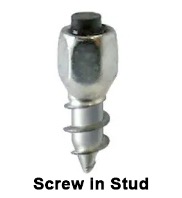
Tire studs are added to winter tires to increase traction. They help with control, acceleration and deacceleration. An aluminum (lightweight) or steel body has a tungsten carbide tip that protrudes from the surface of a tire. There are a variety of stud designs on the market, which are used in various conditions and with varying levels of performance and application. The most common style is the single flange stud that you will see on a majority of the studded snow tires on the road during the winter season on passenger cars and light trucks. Although tires with studs are noticeable on the road due to the noise they cause, damage to roads is negligible compared to the added safety in better stopping on snow and ice. Stopping distance with winter tires is less than half that of a summer tire at 60mph, and studs only improve that in winter conditions.
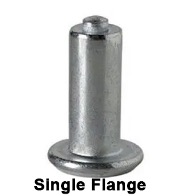
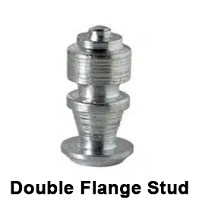
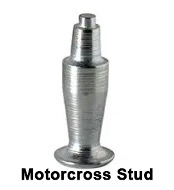
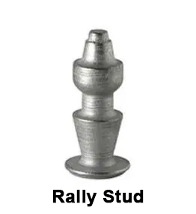
What do the sizes mean?
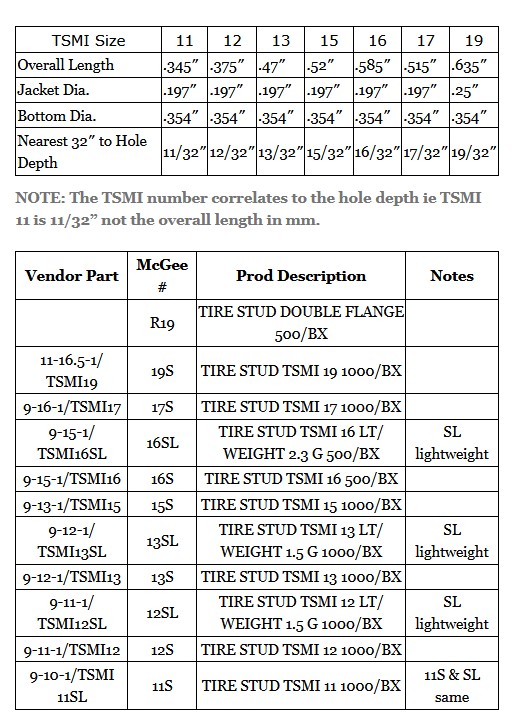
Tire studs, specifically those classified under the Tire Stud Manufacturers Institute (TSMI) standards, come in various sizes to accommodate different tire types and conditions. The TSMI numbering system helps identify the correct stud size based on the tire tread depth. For instance, TSMI #12 is suitable for a 12/32″ tread depth, while TSMI #13 fits a 13/32″ depth. These studs are crucial for enhancing traction on icy surfaces, with the tungsten carbide pin protruding slightly to grip the road, improving vehicle control during winter driving conditions. Ensuring the proper TSMI size is critical for optimal performance and safety.
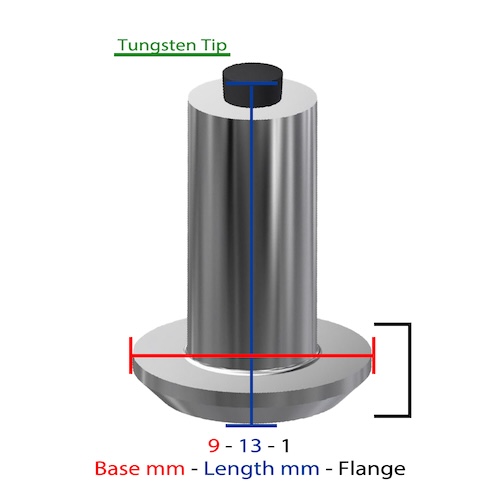 15S Stud 9-13-1.
 NOTE: The TSMI number correlates to the hole depth ie TSMI 11 is 11/32” not the overall length in mm.
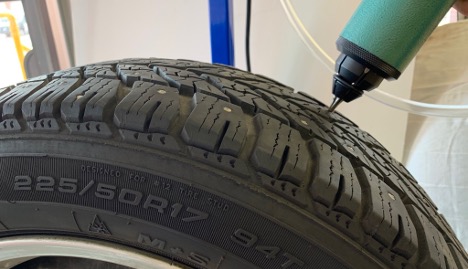 Safety glasses and gloves should always be used while operating studding equipment.
 How to Stud a Tire
Generally, you want to begin by placing the unmounted tire ready to be studded over the aluminum saddle on the (K5) stand.
- Unless the tire stud size is already identified, follow the following general guideline:
- Measure the depth of the hole to be studded with a tire tread depth gauge. If the measurement is 12/32″, then the proper size tire stud is the TSMI #12. If the measurement is 13/32″, then the proper size is the TSMI #13, etc.
- Add water to lubricate the hole for ease of installation and to extend the life of your equipment.
- Take the tip of the stud with the three external fingers (0084) and place on the hole in the tire. Use the stud gun (10G) while pushing into the tire as the tip inserts into the hole.
- Pull the trigger (0098) on the stud gun while keeping pressure on. The stud will be pushed out and the fingers will retract as you release the trigger.
After releasing the trigger, the stud gun returns to the starting position.
Helpful Hints and Recommendations
- Check the common wear parts on your equipment regularly and before use. The head assembly is spring-loaded, so only trained personnel should perform maintenance on a stud gun. Use caution when opening.
- Keep your PSI between 95 and 110 for maximum life of the stud gun and internal parts.
- Daily lubrication with a couple drops of air tool oil (085) into the air input port maximizes the lifespan of your stud gun.
- We recommend advising customers against aggressive driving (hard acceleration, braking, or cornering) for about 50-100 miles to allow the studs to set in properly and provide maximum performance.
Properly and Improperly Installed Studs
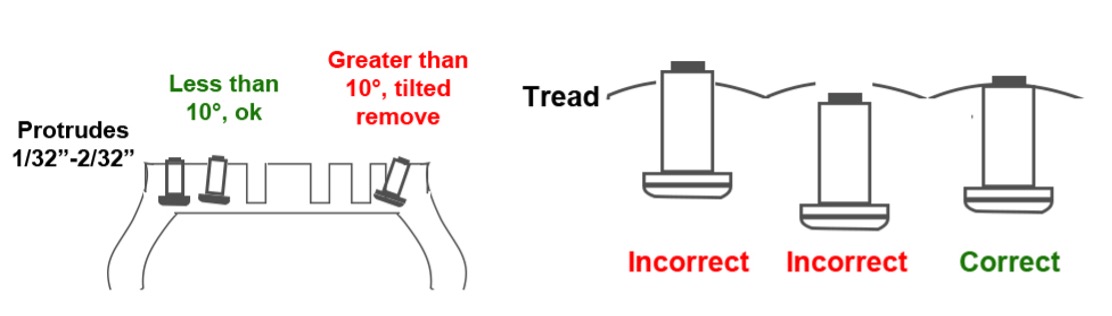
Studs should appear nearly flush with the tire, with only the carbide tip being exposed if properly installed. This should protrude 1/32-2/32” from the surface. Additionally, the stud should be straight into the tire with less than 10 degrees of tilt. Studs at an angle can fail and fall out more easily.
Stud Gun Parts
Do you stud tires? Do you know how to take care of your gun? Check out our quick tutorial video on 10G Stud Gun Repair kit 0382:
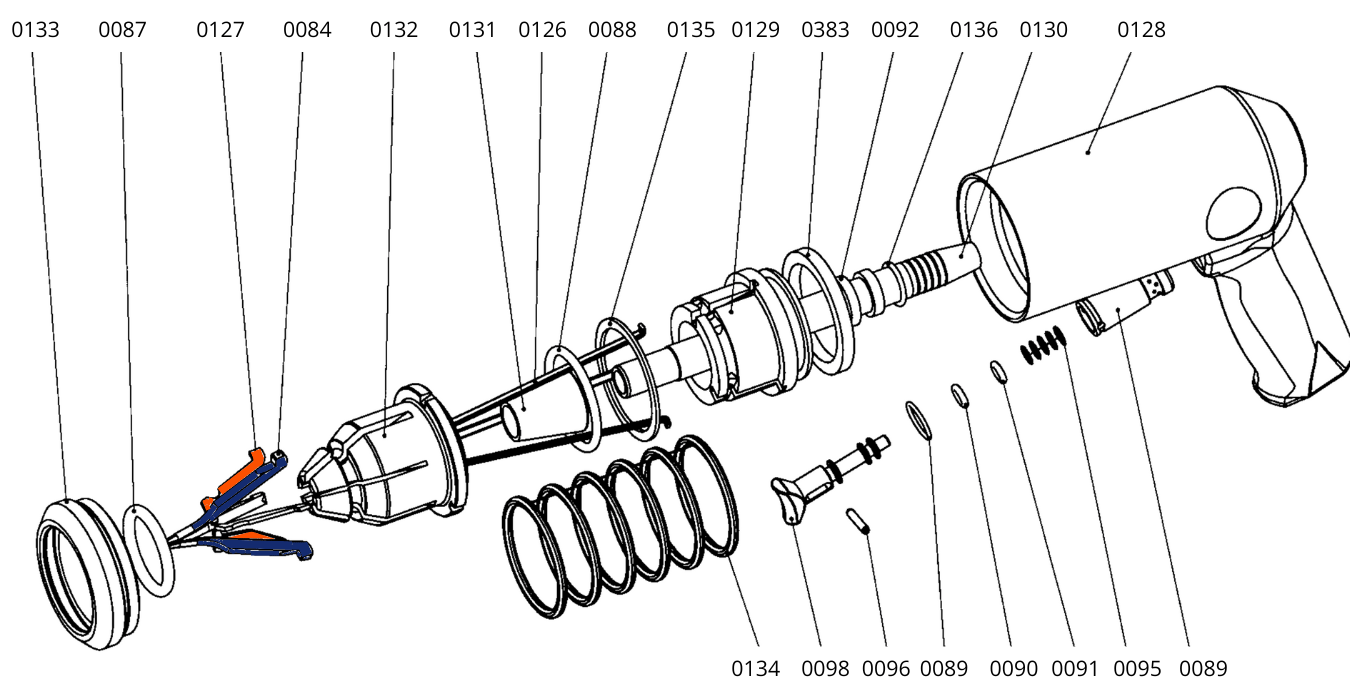
Stud gun maintenance is very useful in maintaining your uptime and ensures your studs get into tires properly without slowing you down. McGee Company offers a few kits for the most common stud guns the 10G (AS-9) model. Although our basic kit 0381 Tire Stud Mini Repair Kit includes: (3) 0084 External Fingers; (1) 0087 O-ring; (1) 0088 O-ring; (3) 0126 Pressing Springs, you can order the parts individually as well. Please see the video below to walk you through installing or changing out any parts. You will need safety glasses and we recommend gloves to keep clean. Here is the full product breakdown with all the parts of your stud gun labeled as well.
McGee Company stocks studs from Ugigrip in addition to studding equipment made domestically and from OKU. Give us a call today to figure out the best solution for your studding needs, or get set up as a distributor.